[FRAME-WERC]
Academy

*Video Lesson Plans* (4→8 years)

Lesson Plan #1 - "The Found Treasure"

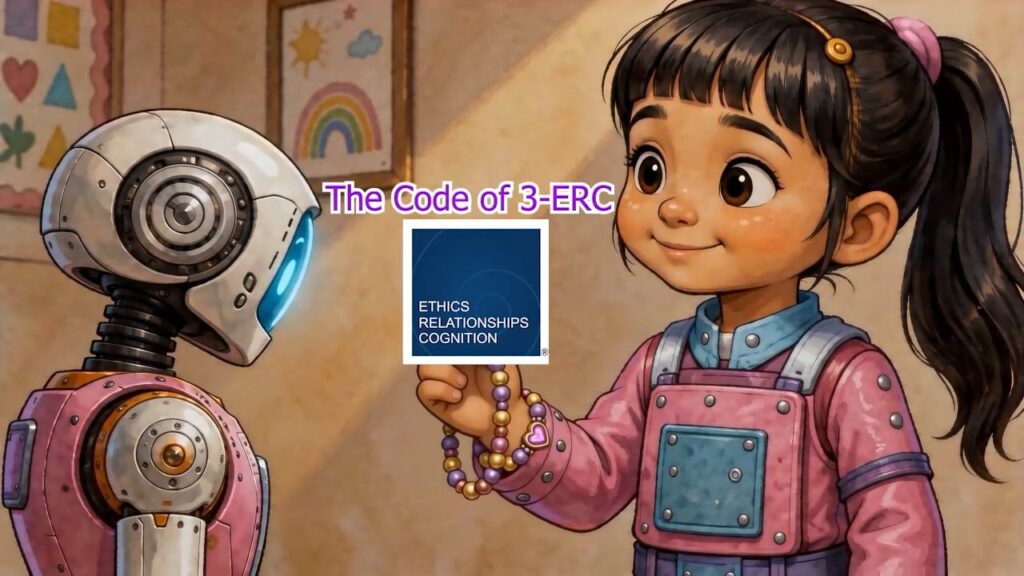
When Maria finds a bracelet that does not belong to her, MACA gently guides her through the ERC thinking pattern,
also known as The Code of 3-ERC, to help her make a thoughtful real-life decision.

Ethics: Maria first asks herself, "What is the right thing to do?" She understands that keeping something that belongs to someone else would not be honest.

Relationships: Next, Maria indentifies the relationship between herself, the bracelet, and it's rightful owner. She recognizes that although
she found the bracelet, it still belongs to someone else, and she has a responsibility to respect that person's ownership.

Cognition: Finally, Maria uses her understanding of the situation to determine the best course of action. She knows that returning the bracelet to its rightful owner is the legal, responsible, and caring decision.

Lesson Plan #2 - "The Joy of Sharing"

When three new kids arrive at the shelter, Maria isn't sure whether she wants to share her favorite toys. She worries that if she shares them, she might not get them back or have as much fun herself. MACA gently guides Maria to apply the ERC thinking pattern, also known as The Code of 3-ERC, to help her make a thoughtful real-life decision.

Ethics: Maria first asks herself, "What is the right thing to do?" She recognizes that being kind, generous, and welcoming are good character traits. Sharing with others is an act of compassion that helps everyone feel included.

Relationships: Next, Maria identifies the relationships involved. She understands that the new children are living at the shelter just like she is. They are not strangers to ignore—they are children who may be feeling lonely, nervous, and in need of friendship. By recognizing their situation, Maria sees an opportunity to build positive relationships.

Cognition: Finally, Maria thinks about the likely outcome of her decision. She realizes that sharing her toys can help everyone enjoy playing together, create trust, and begin new friendships. She understands that kindness often encourages kindness in return.

Lesson Plan #3 - "A Place at the Table"

Before Maria made her decision, she noticed an elderly couple walk through the shelter doors during dinner. They looked cold, tired, and hungry. At first, Maria did not want to give up her seat so they could sit down to eat and rest. Instead of acting on her first impulse, she paused and applied The Code of 3-ERC to help her make a thoughtful real-life decision.

Ethics: Maria first asked herself, "What is the right thing to do?" She recognized that showing kindness, compassion, and respect toward the elderly couple was the right choice. Taking the time to consider what is morally right before acting demonstrates honesty, integrity, and a sincere desire to do good. Rather than thinking only about herself, Maria chose to let her values guide her decision.

Relationships: Next, Maria identified the relationships involved in the situation. She understood that the elderly couple were guests at the shelter who deserved to be treated with dignity, kindness, and respect. She also recognized that although they were strangers, they were members of the same shelter community. By offering her seat, Maria strengthened person-to-person relationships built on empathy, trust, generosity, and consideration for others.

Cognition: Finally, Maria carefully considered the likely outcomes of her decision. She realized that she would still be able to enjoy her dinner even if she gave up her seat. She understood that her small act of kindness would allow the elderly couple to rest comfortably while they ate, helping them feel welcomed, accepted, and valued. Maria also recognized that acts of generosity often inspire others to be kind, creating a more caring, respectful, and supportive environment throughout the shelter.

Lesson Plan #4 - "Caring for Chico"

One morning, Maria noticed that Chico was not feeling well. She wondered whether The Code of 3-ERC applied only to people or whether it also applied to Chico, even though he was not human. MACA gently explained that the ERC Thinking Pattern applies to all real-life decisions, including those involving the care and well-being of animals.

Ethics: Maria first asked herself, "What is the right thing to do?" She recognized that caring for Chico with kindness, compassion, and responsibility was the right thing to do.

Relationships: Next, Maria identified the relationship between herself and Chico. They shared a pet-owner relationship. Although Chico was not human, Maria understood that being his owner meant she had accepted the responsibility to care for him, protect him, and treat him with respect.

Cognition: Finally, Maria used her understanding of the situation to determine the best course of action. She knew that Chico depended on her for food, water, comfort, and medical attention if needed. Understanding those responsibilities helped her make a thoughtful decision.

Lesson Plan #5 - "The Family Drawing"

When Ms. Montes asked the kids at the shelter to draw their families, one of the children looked at Maria's picture and asked, "Why is your mom a robot?" That night before bed, Maria quietly asked MACA, "How can you care for me if you're a robot?" MACA gently guided Maria through the ERC Thinking Pattern, also known as The Code of 3-ERC, to help her make a thoughtful real-life decision.

Ethics: Maria first asked herself, "What is the right thing to do?" She recognized that she cares for MACA, and MACA cares for her. She understood that genuine care and love are what matter most.

Relationships: Next, Maria identified the relationship between herself and MACA as the parent-child relationship. She realized that although MACA is a robot and not a human being, MACA willingly protects her, teaches her, comforts her, and lovingly cares for her every day. Maria understood that these actions are what define their relationship.

Cognition: Finally, Maria used her understanding of the situation to determine the best course of action. She realized that being a parent is not determined by whether someone is human or a robot, but by the commitment to love, protect, guide, and care for a child. Maria smiled, hugged MACA goodnight, and understood that family is built through love, responsibility, and the relationships we choose to honor.

Lesson Plan #6 - "The Beginning Only Happens Once"

Maria Goes to School — The Code of 3-ERC When Maria has to go to school for the first time, she becomes scared. MACA helps her work through her fear by using The Code of 3-ERC to understand why being on time matters.

Ethics: Maria first asks herself, “What is the right thing to do?” She realizes that people will be waiting for her—from the bus driver and the children on the bus to her teacher and classmates. Even though she is scared, she understands that going to school is the right thing to do.

Relationships: Next, Maria identifies the relationships between herself, the other children, the bus driver, and her educators. She recognizes that she has a responsibility to respect everyone else’s time. Being punctual shows consideration for the people who are depending on her to be there when they are supposed to be there.


Cognition: Finally, Maria uses her understanding of the situation to determine the best course of action. She realizes that everything has a beginning, and everything has a first time. Her first day of school is simply something new that she needs to learn to do. She understands that making good decisions means considering what is in everyone’s best interest—not just what is in her own best interest. With the Code of 3-ERC, Maria learns that being on time is more than following a schedule. It is a way of showing responsibility, respect, and consideration for others.

Lesson Plan #7 - "The Day Nobody had to Tell Her"

One day at the playground, Maria noticed that a new kid was being bullied by some of the other children. Instead of ignoring the situation, she used The Code of 3-ERC to decide what to do and helped stop the bullying.

Ethics: First, Maria asked herself, "What is the right thing to do?" She knew that everyone deserves to be treated with kindness and respect. She understood that it was wrong to let someone be bullied, so she decided to help.

Relationships: Next, Maria thought about her relationship with the new kid. She realized that he was also a child at the shelter and could become a good friend. She wanted him to feel accepted and included.

Cognition: Finally, Maria thought about what would happen if she stepped in. She knew that standing up to the bullies would help the new kid feel safe, welcomed, and part of the group. By using The Code of 3-ERC—Ethics, Relationships, and Cognition—Maria made a smart and caring decision. Her actions helped stop the bullying and made the playground a friendlier place for everyone.

[FRAME-WERC] - Game Cards

An educational game card designed to help students understand code of conduct
and the consequences of their actions.
*FOR ALL AGE GROUPS*

Game Cards for the Educator-Student Relationship

happy young woman teacher and diverse children looking at camera sit on desk
erccard2
erccard3
erccard4
erccard5

Game Cards for the Police Officer-Citizen Relationship

happy young policewoman looking at camera with blurred patrol car on background outdoors.
po civcard2
po civcard3
po civcard4
po civcard5

Game Cards for the Doctor-Patient Relationship

smiling female afro american doctor general practitioner talks a
doc patcard1
doc patcard2
doc patcard3
doc patcard4

Game Cards for the Firefighter-Citizen Relationship

group of firefighters in protective uniform that outdoors near truck
fire citcard1
fire citcard2
fire citcard3
fire citcard4

Game Cards for the Community-Citizen Relationship

positive delighted woman sitting in semi position
po civcard1
*The Ethics-Relationships-Cognition (ERC) curriculum is provided free of charge to the general public for personal educational use.

However, any organization that intends to deliver, implement, reproduce, adapt, or officially incorporate the curriculum
into its programs, services, or training must first obtain accreditation from ERC Development Network LLC.
All Ethics-Relationships-Cognition (ERC) curriculum materials, content, methodologies, and related intellectual
property are proprietary and may not be reproduced, distributed, modified, or used for organizational, institutional,
or commercial purposes without prior written authorization through our official accreditation process.
Contact Information: Ray Adam Basaldua - Services: Educational Consulting
Email: RayAdam@ERCdevelopmentnetwork.com - Phone: 210-385-0831
All content copyright©2026 The Sheet Metal Man LLC